
Case Study: Specialist Graffiti Removal at West Register House
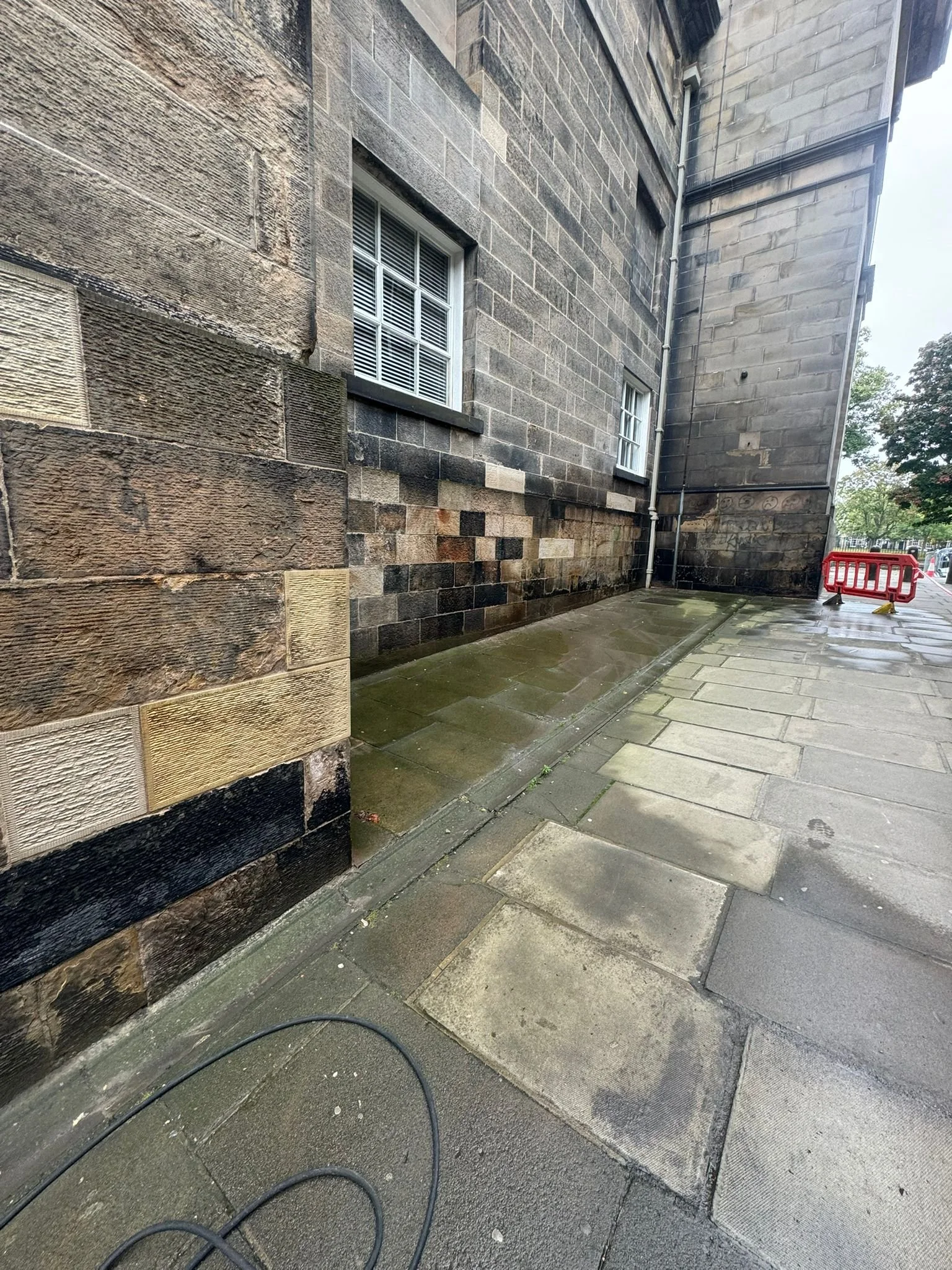
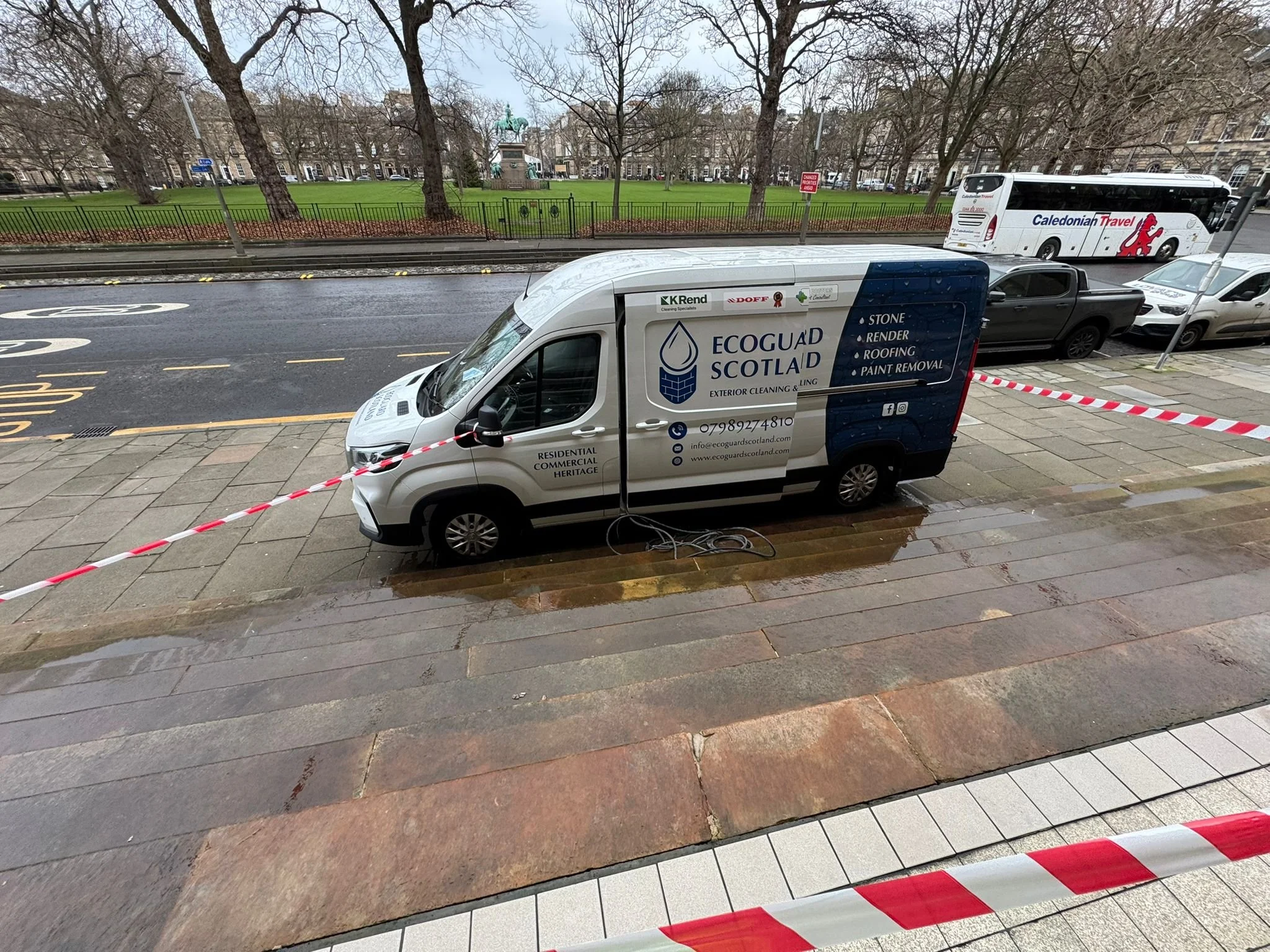
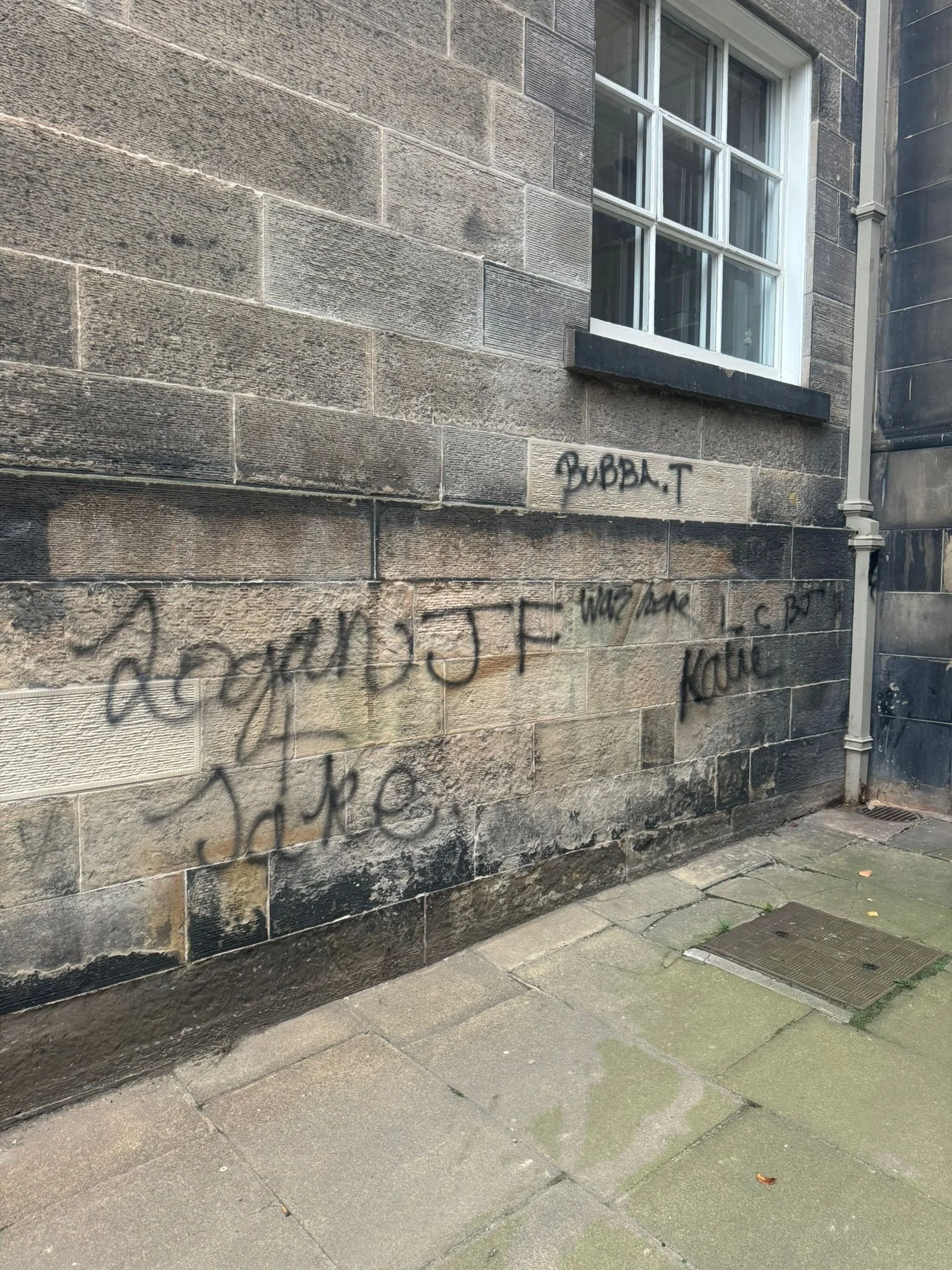
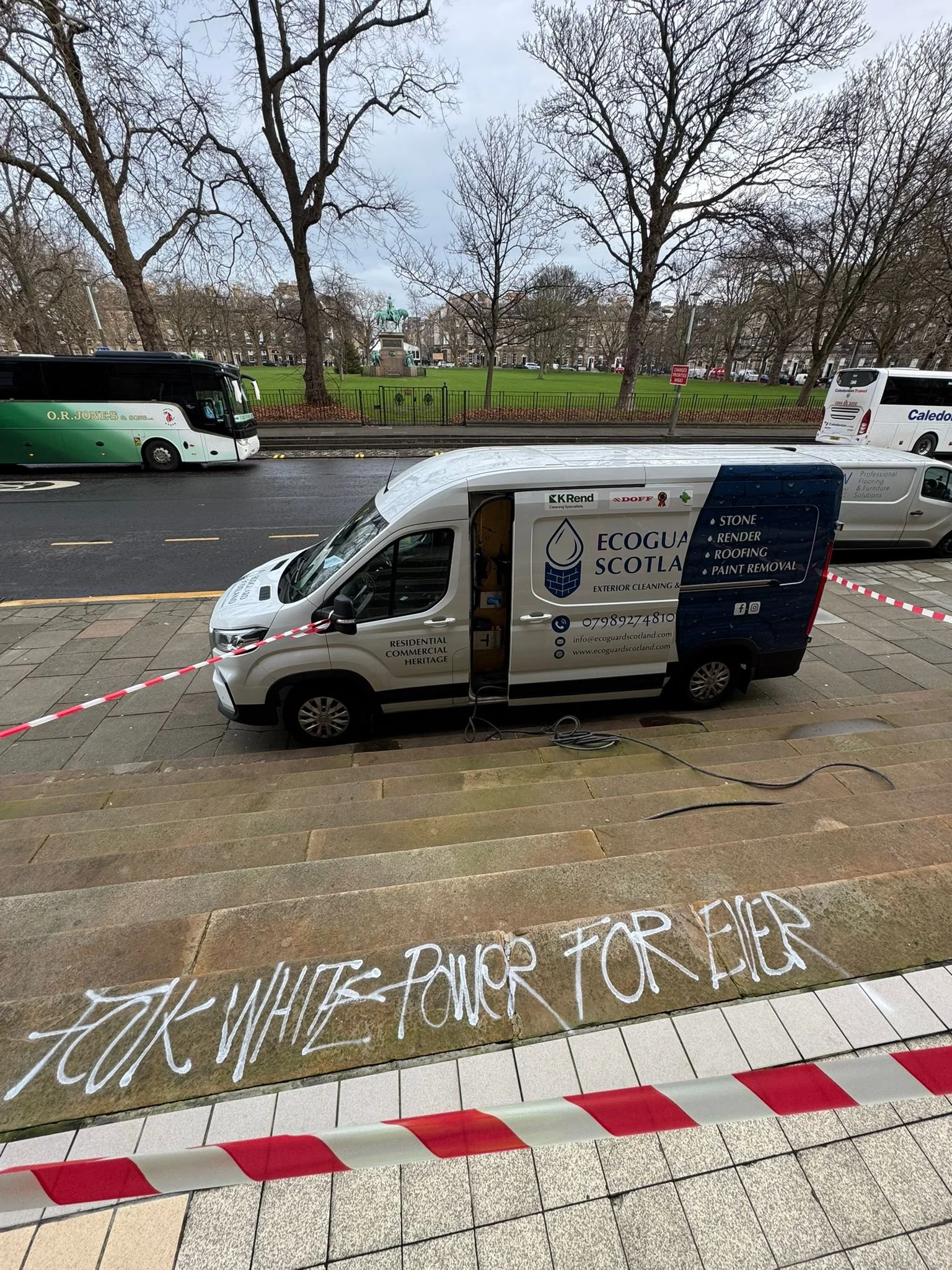
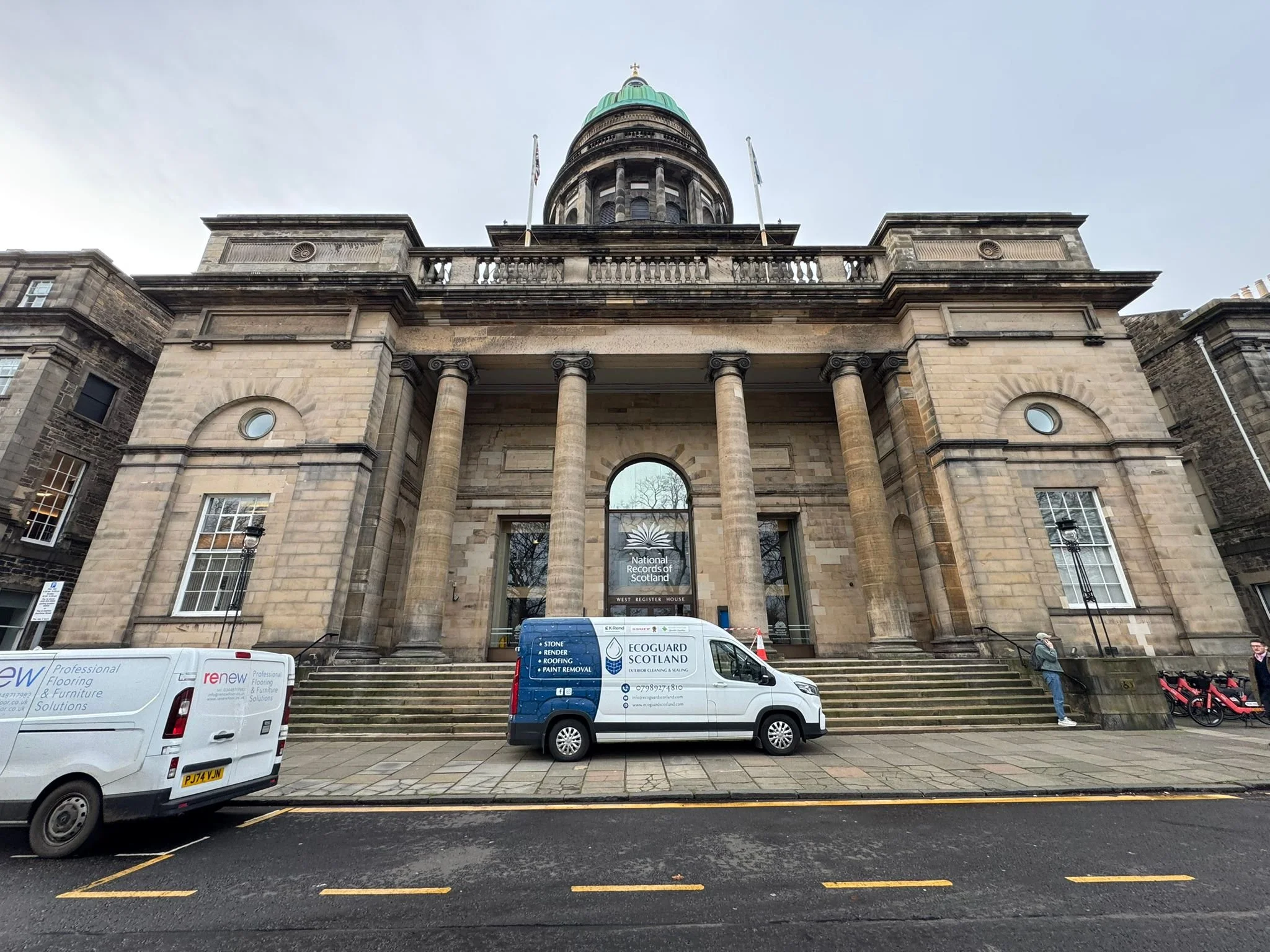
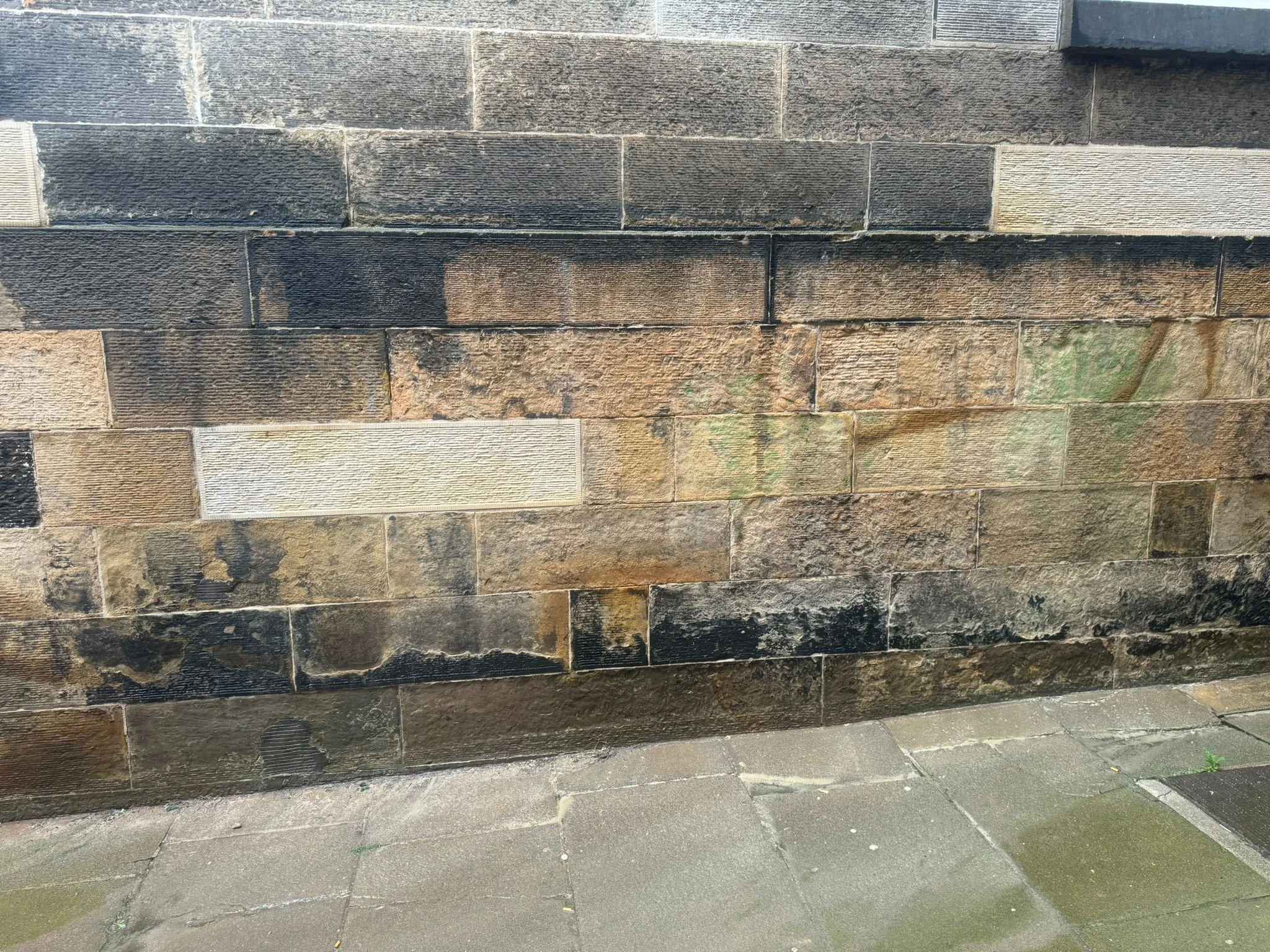
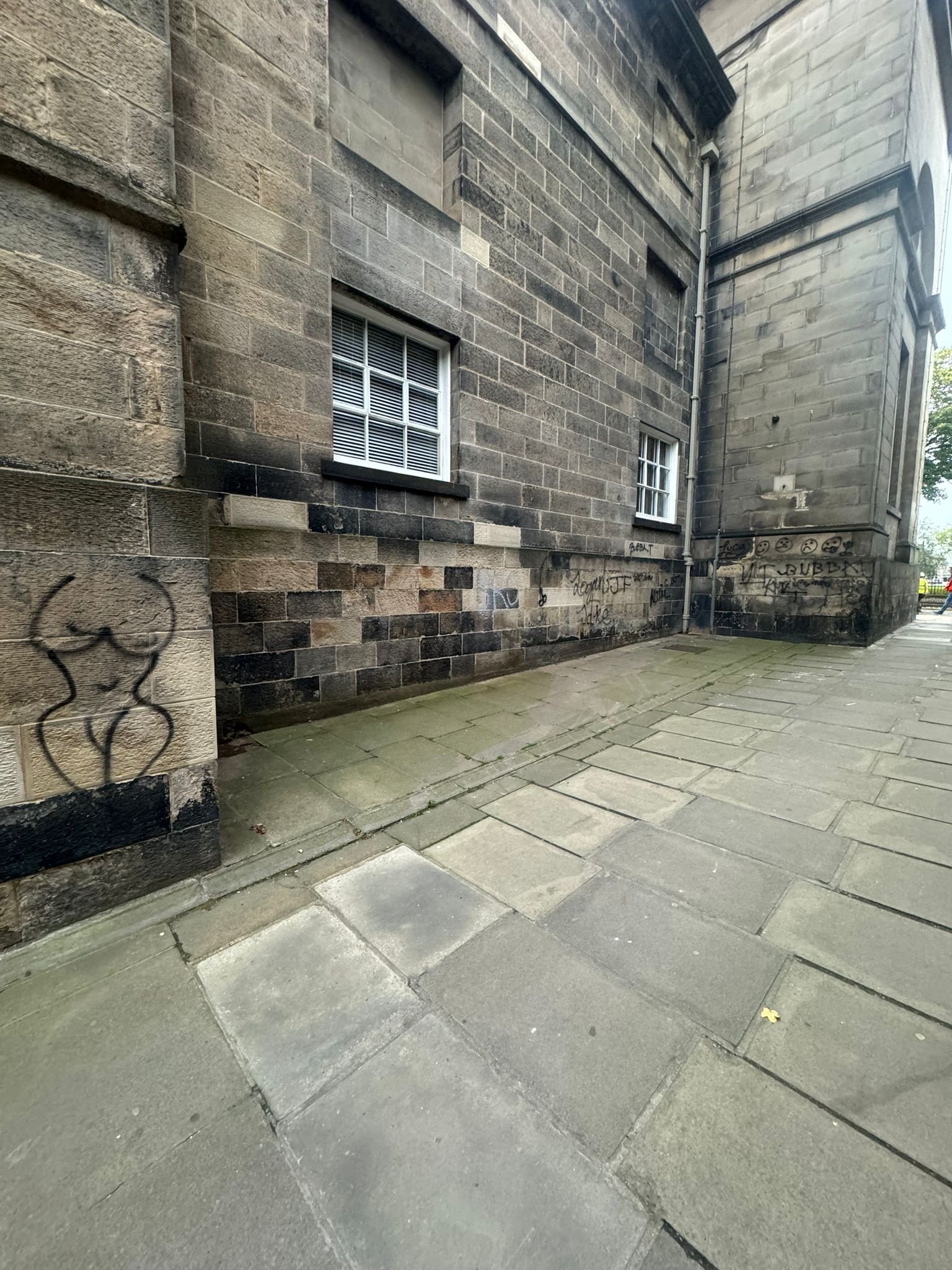
Project: Heritage Graffiti Removal
Location: West Register House, Edinburgh
Client: National Records of Scotland
Facilities Management: Robertsons Facilities Management
Project Overview
Ecoguard Scotland was appointed to carry out specialist graffiti removal works to multiple elevations of West Register House, a Category A listed building forming part of the National Records of Scotland (NRS) estate in Edinburgh.
Due to the building’s historic significance, prominent city-centre location, and the sensitive nature of its stonework, all graffiti removal methods required prior approval from conservation architects. The primary objective was to remove vandalism effectively while ensuring no damage or visual alteration to the original sandstone fabric.
Historical Significance of West Register House
West Register House, also known as the former General Register House annexe, was constructed in the early 20th century to support Scotland’s national archives. Designed to complement the adjacent General Register House, the building forms part of one of Edinburgh’s most important civic and archival complexes.
The structure is built predominantly from Scottish sandstone, a material widely used in Edinburgh’s historic architecture. While durable, sandstone is inherently porous and vulnerable to damage if inappropriate cleaning methods are used—particularly when dealing with graffiti and modern paints.
Scope of Works
Ecoguard Scotland undertook graffiti removal from multiple areas of the building, including lower-level elevations and publicly accessible locations. Given the visibility of the site and its heritage status, a conservation-led approach was essential.
The works included:
Assessment of graffiti type and penetration into the stone
Selection of non-abrasive, stone-safe cleaning systems
Application of approved poultices and controlled cleaning methods
Careful rinsing and neutralisation to prevent staining or ghosting
Ongoing liaison with conservation architects and site managers
Conservation-Approved Cleaning Methods
All graffiti removal techniques were specifically approved by conservation architects prior to application. Methods were selected to ensure:
No abrasion or surface loss to the sandstone
No alteration to the stone’s natural colour or texture
Avoidance of harsh chemicals or high-pressure systems
Preservation of the building’s historic patina
Test panels were carried out where required to confirm effectiveness and compatibility with the stone substrate before full removal works proceeded.
Emergency Response & Facilities Management Support
Due to the high-profile nature of the building and the risk of graffiti becoming permanent if left untreated, Ecoguard Scotland operates an emergency call-out procedure in partnership with Robertsons Facilities Management, who are responsible for the day-to-day care of the building.
This rapid-response arrangement ensures:
Graffiti incidents are addressed as quickly as possible
Reduced risk of pigment migration into porous sandstone
Minimal visual impact on this nationally significant building
Consistent, approved methods are used for every intervention
Project Challenges
Publicly Accessible Location: The building sits within a busy area of Edinburgh, requiring careful planning to maintain public safety and minimise disruption.
Sensitive Stone Fabric: The porous nature of historic sandstone demanded meticulous control over cleaning methods and dwell times.
Outcome
The graffiti was successfully removed from all affected areas without damage to the sandstone or surrounding masonry.
Through sensitive, conservation-approved techniques and a rapid-response approach, Ecoguard Scotland helped preserve the integrity and appearance of West Register House while supporting the ongoing stewardship of this important historic building.
Ecoguard Scotland Expertise
This project demonstrates Ecoguard Scotland’s capabilities in:
Graffiti removal from listed and historic buildings
Conservation-led cleaning of sandstone façades
Working under conservation architect approval
Emergency response services for high-profile heritage assets
Collaboration with facilities management teams